
Back Pain Treatment:
Solutions with Conventional Methods
Painkillers, rest, more painkillers- that cycle sounds familiar. At Pasaporte a la Salud, we don’t offer just another temporary fix. We help you find the root cause of the pain and resolve it at the source, so you can move, work, and sleep without your back being the first thing on your mind every morning.
Are you still waiting for the right treatment for your back pain, which has persisted for days, weeks, or months? Talk to our team today.
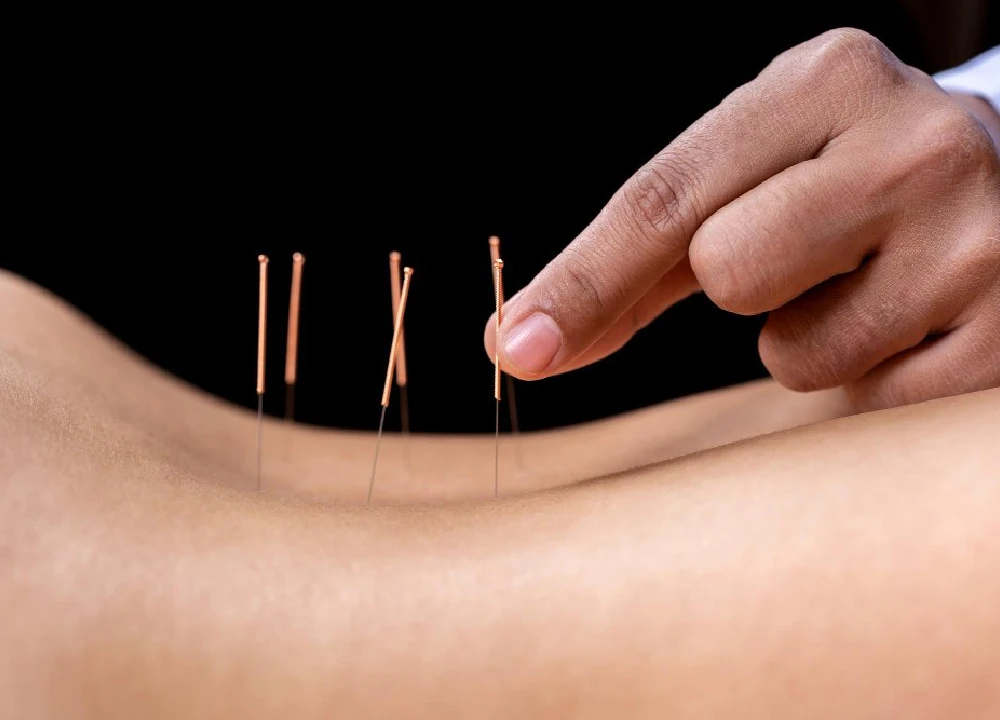
Why Does Back Pain Still Hurt? What Back Pain Treatment with Pills Never Addresses?
Back pain doesn’t just happen for no reason. Behind every instance of pain lies a mechanical, structural, or muscular cause- one that often isn’t located exactly where you feel the discomfort.
A gluteal muscle spasm can trigger pain in the lower back. An inflamed disc can send pain radiating all the way to the knee. Hours of sitting with poor posture cause tension to build up; the body endures it until it can take no more, and the pain flares up at the worst possible moment. Explore our chiropractic care in Guaymas, Mexico, for personalized support with back pain, neck pain, joint discomfort, and other musculoskeletal concerns.
In our consultations, we most frequently see muscle contractures caused by sustained tension, herniated or bulging discs pressing on nerve roots, joint wear and tear linked to aging or excess weight, sciatica radiating pain from the lower back down to the foot, and muscles weakened by a sedentary lifestyle to the point where they can no longer properly support the spine.
Taking an anti-inflammatory might reduce the pain for a few hours, but it doesn’t address any of those underlying causes. That is why the pain returns- and each time it does, it tends to be slightly worse than before.
Not sure exactly what is causing your pain? Schedule an assessment, and we’ll explain it to you.
Signs Your Back Pain Requires Urgent Treatment
There are aches and pains that improve on their own with two days of rest. There are others that signal something more serious- something you shouldn’t ignore.
- Pain that has persisted for more than two weeks without improving, even with rest.
- Sensation radiating down the leg to the knee or foot
- Tingling or numbness in the buttocks, legs, or feet
- Pain that worsens when lying down or wakes you up in the middle of the night.
- Real difficulty walking, bending down, or getting up from a chair.
- Discomfort that began after a fall or a direct blow.
Any of these signs indicate that your body needs a professional evaluation- no more pills, no more waiting.
Don’t keep putting off something that has a solution. Contact us today, and we’ll see you this week. For a holistic approach to managing stress and anxiety, explore our oriental medicine techniques.
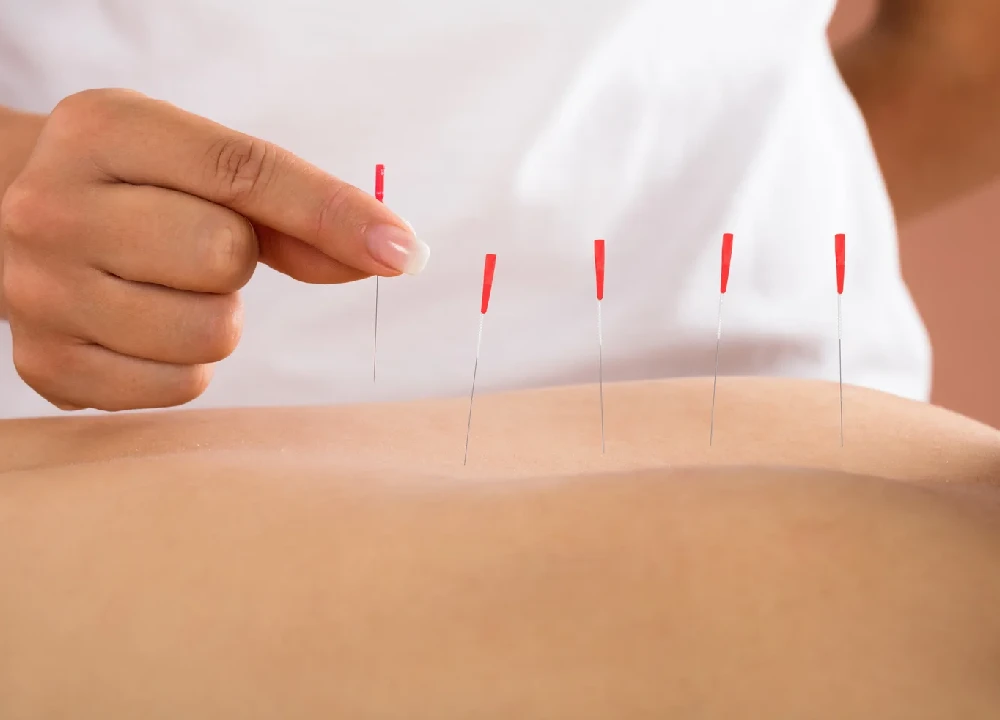
How We Treat Back Pain: A Comprehensive Approach at Pasaporte a la Salud
Two people with back pain may require completely different treatments. That’s why we never start with the treatment itself; we start by understanding what is actually going on.
1. Proper assessment and diagnosis before any back pain treatment
We review your medical history and assess your posture, mobility, and the specific patterns of your pain. When necessary, we order X-rays or MRIs to see exactly what is happening internally. Treating a condition without a clear diagnosis is like shooting in the dark.
2. Physical therapy and rehabilitation as the core of back pain treatment
For most cases, this is the most effective treatment available. Using manual techniques, mobilization, and therapeutic exercises, we reduce inflammation, release accumulated tension, and restore the range of motion that pain has gradually taken away. You will start to notice changes within the first few sessions if you remain consistent with the process.
3. Medication as support, not a solution
When pain is so intense that it prevents movement, anti-inflammatories or muscle relaxants can help your body participate in the actual treatment. We use them as a transitional tool, not as a long-term fix.
4. Targeted muscle strengthening to sustain long-term results
Weak muscles eventually lead to pain. We teach you how to strengthen your core, glutes, and paraspinal muscles—the ones that truly support your spine in your daily life. These aren’t generic exercises; they are movements designed specifically for your case, supervised by our team and adjusted as you progress.
5. Posture and ergonomics to prevent the need for repeat treatment
If you spend eight hours sitting in front of a screen or standing in the same position, that is part of the problem—and it has a solution. We provide concrete advice on adjusting your chair, screen, mattress, and movement habits so the pain doesn’t return for the same old reasons.
Want to know which combination of treatments makes sense for your specific pain? Schedule your consultation today.
What helps and what worsens the pain at home while your back pain treatment progresses?
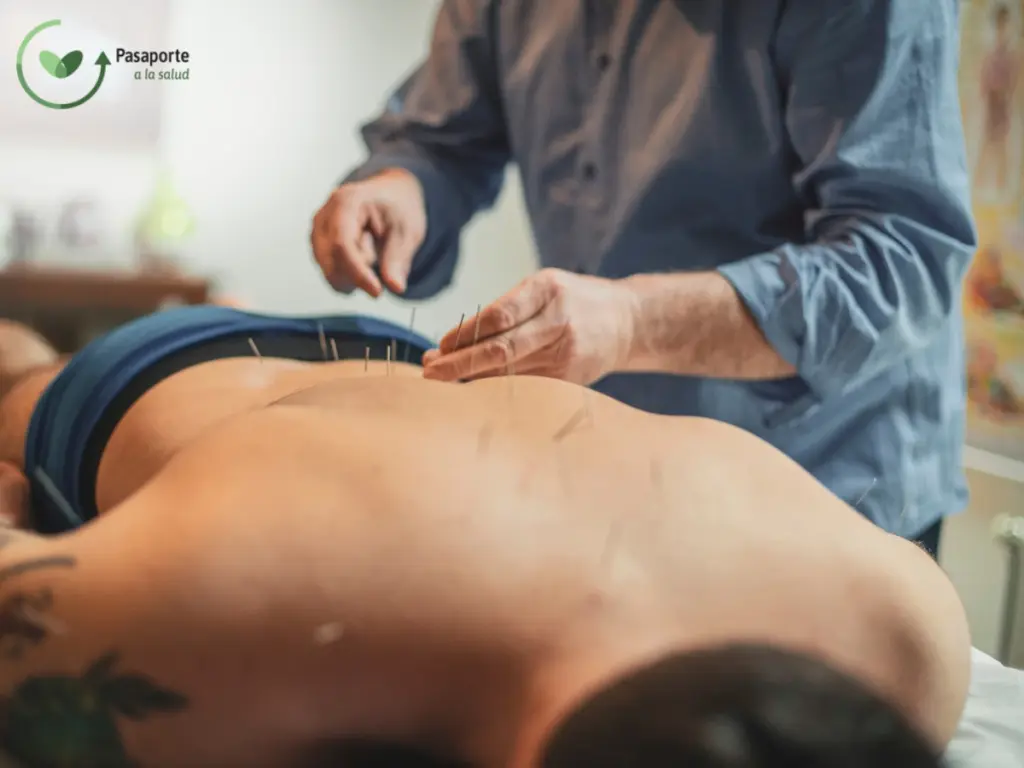
Many people inadvertently worsen their pain by not knowing how to manage it between appointments. These points make a real difference.
Staying gently active- even if it hurts a little- is better than complete rest, because immobile muscles become stiffer and the pain returns more intensely. Heat works well for chronic muscle tightness to help loosen tension. Cold is the right choice during the first 48 hours of acute pain or after an injury to reduce inflammation. Sleeping on your side with a pillow between your knees keeps your spine aligned and reduces pressure on the discs. Getting out of bed by rolling onto your side first avoids putting sudden strain on your lumbar spine.
Things are made worse by sitting for more than 45 minutes without getting up to move, even briefly; lifting heavy objects with a bent back instead of using your knees; regularly wearing high heels, which misaligns the entire spinal chain; self-medicating with strong painkillers without knowing the underlying cause, as this masks the problem without solving it; and strict bed rest for more than two days, which deprives muscles of the movement they need to recover. For those seeking a natural approach to pain management and overall wellness, explore our Acupuncture services in Mexico.
Do you have questions about how to manage your current pain? Write to us, and we will provide guidance at no cost.
Four Exercises for Initial Back Pain Treatment.
These movements are safe for most types of lower back pain. However, if you have a diagnosed herniated disc or very acute pain, consult your doctor before trying them.
While lying on your back, bring both knees to your chest and hold the position for 30 seconds to release lower back tension. Perform the cat- cow pose on all fours, slowly alternating between arching and rounding your back to mobilize the entire spine. The glute bridge- performed lying on your back with knees bent, lifting your hips and holding for 5 seconds- strengthens the muscles that support the lower back. The piriformis stretch- crossing one ankle over the opposite knee and gently pulling toward your chest- releases tension in the gluteal muscles, a common cause of lower back pain.
Spending ten minutes each morning on these movements can make a noticeable difference in how your back feels throughout the rest of the day.
Do you want a routine designed specifically for your type of pain? Our physiotherapist can create one for you during your first consultation.
Frequently Asked Questions (FAQ)
The therapy helps in reducing inflammation. It can release muscle tension. Also, it can improve
mobility and strengthen supporting muscles. It forms the core of back pain treatment for many Patients.
The Back that Hurts today might not Hurt Tomorrow with the right Back Pain Treatment.
The pain you have been carrying has a specific cause and that cause has treatment. With the right diagnosis, the right plan, and the habits we work on with you, recovery is no vague promise. It is the result we see every day in our clinic.
Call us today, write to us now or schedule your consultation online. Your back has already waited too long.

