Executive Summary (TL;DR): This blog focuses on treating back pain—as well as neck pain, joint pain, and chronic lower back pain—using Eastern medicine and acupuncture, all without surgery or medication. You will learn the science behind these methods, what to expect during an acupuncture session, and why patients across Sonora choose this approach over conventional care.
Think about it for a moment: around eighty percent of us will deal with nagging back pain at some point in our lives. Yet, most people get stuck in the same frustrating cycle: you receive a prescription for painkillers and a generic referral to a surgeon, only to find yourself still in pain.
At Pasaporte a la Salud, right here in Sonora, we see this same story play out every week.
We have patients driving in from Guaymas, San Carlos, Empalme, and right here in Hermosillo who are simply tired of being told that surgery is their only option. They’ve taken anti-inflammatories. They’ve tried bed rest. Some have even tried spinal injections. But the moment those temporary fixes wear off, the pain comes right back.
That’s where treating back pain with Eastern medicine changes the game. It doesn’t just throw a blanket over your symptoms; it digs deep to uncover the root cause of your pain in the first place. And honestly, the data supporting this has been piling up for over thirty years.
The Real Truth About Back Pain and Acupuncture
- Your MRI might be misleading you: Believe it or not, research shows that more than 85% of chronic lower back pain cases do not reveal a clear anatomical cause on a scan. Therefore, even if your MRI looks alarming, your actual pain usually stems from a deep muscle locked in spasm, irritated nerves, and poor blood flow. These are the exact physical issues that acupuncture targets.
- The NIH fully agrees: A major 2025 study published in JAMA Network Open (funded by the National Institutes of Health) tracked patients receiving acupuncture for back pain. The result? They saw massive improvements in how the patients could move and function compared to those receiving only standard medical care.
- Tricking your brain into healing you: When the needles go in, they trigger a chemical reaction that releases endorphins and shifts your central nervous system out of “fight-or-flight” mode. Basically, your body starts producing its own pain relief.
- It takes some time: Don’t expect a miracle in five minutes. Healing builds momentum. Most of our patients notice a real, measurable change sometime between their third and sixth visit—not the moment they get off the treatment table for the first time.
- We look at the big picture: A skilled professional won’t simply insert needles where it hurts today. They will observe your posture, daily stress, and lifestyle to uncover the systemic pattern causing the problem.
- It works just as well for your neck and joints: Data shows that using acupuncture for cervical issues can trigger functional improvements that persist for months after the final session. It is one of the few long-lasting, drug-free options available.
What Exactly Is Oriental Medicine?
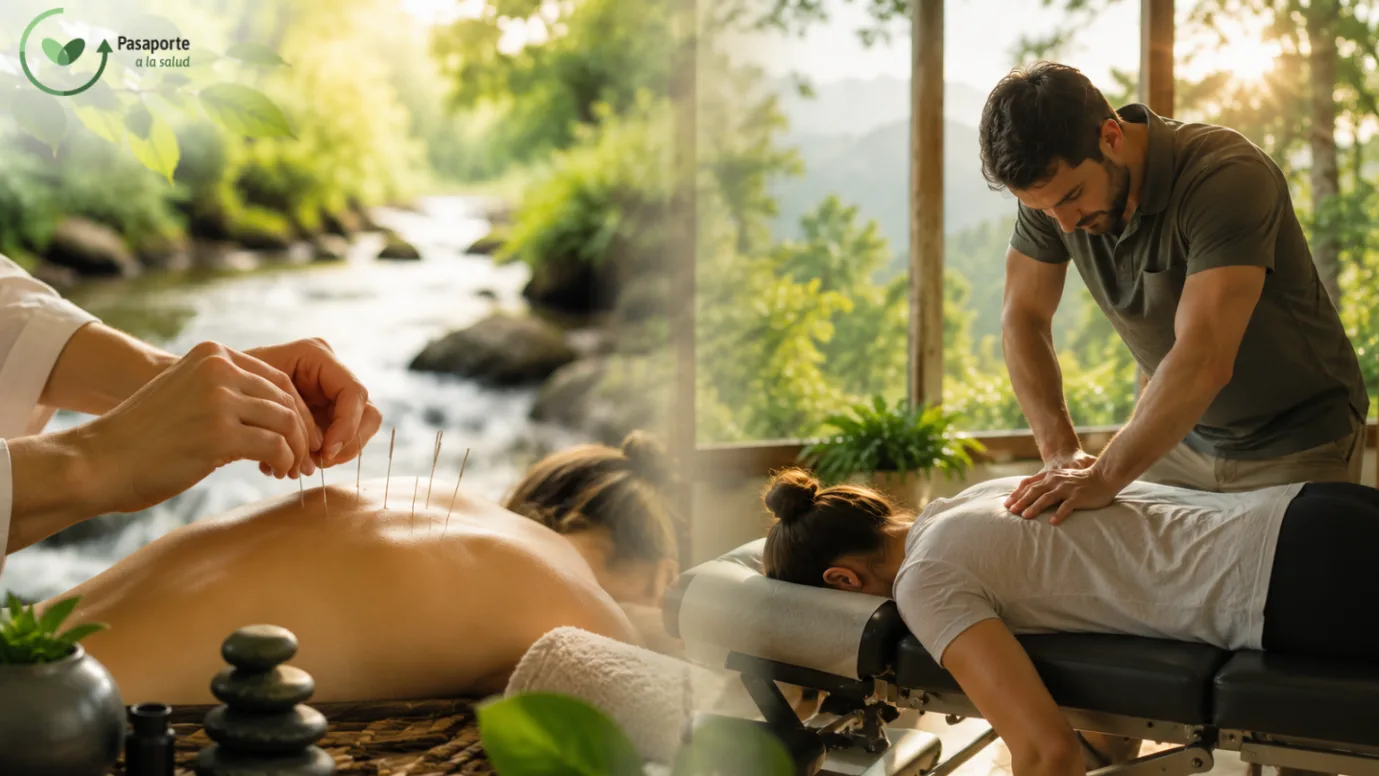
Oriental medicine is a comprehensive medical framework. We use a combination of acupuncture, customized herbal formulas, cupping, Tui Na (a form of therapeutic massage), and targeted nutrition. People have been using and refining these very tools for thousands of years to treat torn muscles and aching joints.
If you look at it through the lens of modern Western medicine, here is what actually happens when you receive back pain treatment at our acupuncture clinic:
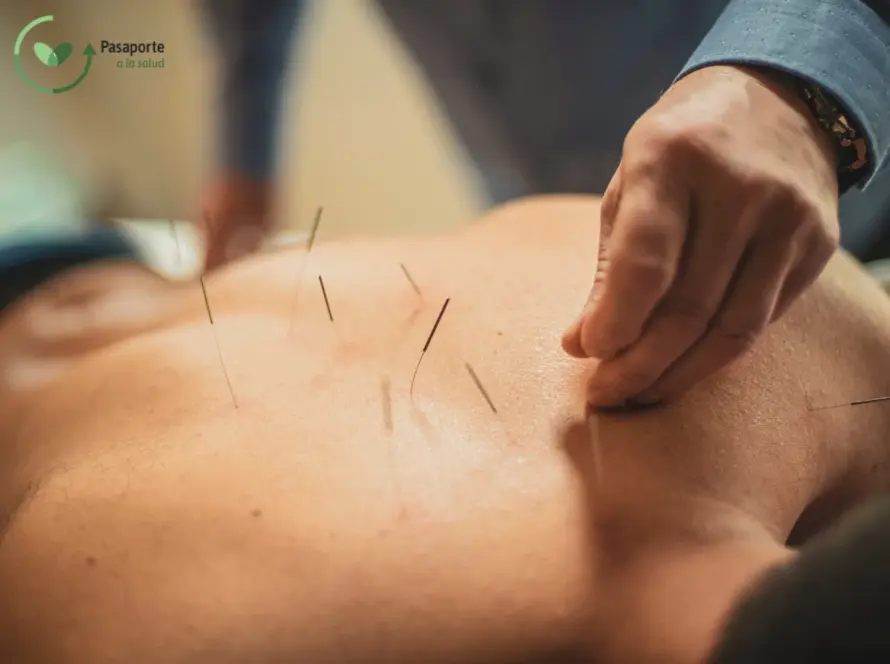
- Sterile, ultra-thin needles enter very specific points on your body.
- This action awakens your nervous system.
- Your body responds by sending natural anti-inflammatories and pain-relieving chemicals to the area.
- Fresh, oxygen-rich blood flows toward the taut tissue.
- Those stubborn, locked-up muscle spasms are finally starting to let up.
There is no mysticism here. It is straightforward anatomy and nervous system communication, and modern science is finally demonstrating how it works.
The Royal Science
Let’s review the recent data. That 2025 NIH-funded study (they called it the BackInAction trial) looked specifically at older adults dealing with chronic low back pain. People who added acupuncture for back pain to their routine ended up with significantly better physical function and much less daily pain than the group that just took pills or did basic physical therapy.
On top of that, a massive 2024 review in the journal Heliyon analyzed data from 12 different international databases. They confirmed that acupuncture consistently outperforms standard care for non-specific low back problems. Another study from Frontiers in Medicine showed that if you combine acupuncture with basic core exercises, your long-term results skyrocket.
We can even see this in brain scans now. Functional MRIs show that chronic pain actually rewires your brain’s pain-processing networks over time, keeping them stuck on “high alert.” Acupuncture helps reset those failing circuits, so your body can finally calm down.
Neck Pain Treatment: Repairing the Modern Spine
Your neck takes a beating every day. Between looking down at our phones, sitting at computers for eight hours, and carrying stress in our shoulders, it is no wonder that neck pain is one of the main reasons people walk through the doors of our acupuncture clinic.
Our approach to treating neck pain tackles the problem from two angles: we treat the irritated local muscle tissue and correct the posture or stress patterns that caused the issue in the first place.
Common Problems We Treat Every Day:
- Cervical spondylosis (wear and tear on the joints of the neck)
- Unpleasant tension headaches that start at the base of the skull.
- Rock-hard trapezius and shoulder muscles.
- Pinched nerves causing that annoying tingling or numbness in the arm.
- Whiplash stiffness that simply won’t go away after an accident.
The clinical data align with what we observe in the clinic. A 2024 review on Chinese medicine for chronic neck pain showed that patients experienced massive functional improvements that lasted for months after completing their treatment.
When you come to Pasaporte a la Salud, we don’t just treat your neck. We might use a point like Governing Vessel 20 (Bai Hui) at the crown of the head, as it is proven to calm the nervous system’s stress response.
If we can get your body to stop bracing against stress, those tight neck muscles will finally relax. We combine these local techniques with classic Eastern medicine diagnostic approaches—such as clearing Liver Qi stagnation or warming away “Wind-Cold” invasions—to address the root cause of the problem.
Joint Pain Treatment: Regaining Your Movement
Whether you are dealing with a knee that acts up when it rains, an old shoulder injury that never quite healed, or general wear and tear, personalized joint pain treatment can make a huge difference.
A major review published in PMC analyzed acupuncture for all types of extremity pain, including the shoulders, knees, elbows, hips, and ankles. The verdict was clear: it is a highly effective, drug-free option for reducing pain scores and restoring smooth joint movement.
The beauty of this approach is that we do not treat every joint the same way. If you have a knee that is red, hot, and swollen, we treat it completely differently than a knee that is stiff, cold, and aching deep in the bone. That kind of specific, personalized diagnosis is why this works when one-size-fits-all treatments fail.
Joint Problems We See Most Frequently:
- Knee osteoarthritis
- Frozen shoulder and rotator cuff impingement
- Deep hip and sacroiliac (SI) joint pain
- Tennis elbow or golfer’s elbow (tendinopathy)
- Weak and unstable ankles due to old sprains
First Time at an Acupuncture Clinic?
Here Is the Route
It is completely normal to feel a bit unsure if you have never done this before. We want you to feel completely comfortable, so here is exactly what to expect during your first visit.
Step 1: We Truly Listen to You (The Initial 60- to 120-Minute Evaluation)
Your first visit is lengthy, typically lasting between one and two hours. Why? Because we don’t do five-minute, “factory-style” medical appointments. We will sit down to discuss your health history, sleep, digestion, and how stress affects you.
We will also examine your tongue and take your pulse using traditional Eastern medicine methods. We want to understand why your body is struggling, not just where the pain is today.
Step 2: Your Personalized Game Plan
Once we have the full picture, we create a treatment plan tailored specifically to you. This might involve combining acupuncture with cupping therapy or Tui Na massage.
We will be completely transparent about how many visits you will likely need and the type of progress we expect to see.
Step 3: Time on the Table
You will lie comfortably on a treatment table. You do not need to undress; just ensure that the painful areas are accessible. The needles themselves are incredibly thin—nothing like a hypodermic needle—and most people barely feel them.
In fact, most of our patients relax so much that they take a nap. After this initial visit, regular sessions take only 45 to 60 minutes.
Step 4: Tracking Your Progress
We review your numbers regularly and adjust the treatment as your body heals. We don’t try to keep you coming back forever; our goal is for you to improve enough that you no longer need us.
Back Pain Treatment vs. Undergoing Surgery
| Feature | Spine Surgery | Oriental Medicine / Acupuncture |
| Downtime | From 6 weeks to 6 long months | None at all |
| Side effects / Risks | Moderate to high | Incredibly low |
| Risk of pill dependency | High (opioids, strong NSAIDs) | Zero |
| What it actually repairs | Generally, only the bone/structure. | The structure of your nervous system |
| Is it backed by data? | Yes (for specific major injuries) | Yes (especially for chronic/daily pain) |
| The cost | Very high | Moderate and predictable |
| Who it’s really for | Severe structural damage or nerve compression | Chronic pain, locked muscles, and non-surgical cases |
Look, surgery absolutely has its place. If you have a massive herniated disc completely compressing a nerve, severe spinal instability, or are losing bladder control, go see a surgeon immediately.
But for the vast majority of people living with chronic back pain, surgery isn’t even indicated. Eastern medicine offers a legitimate, safe, and drug-free way to reclaim your life.
Frequently Asked Questions
How many sessions will I need?
Most people dealing with chronic lower back pain start to notice a real difference around the third to sixth visit. A typical initial plan consists of 8 to 12 sessions spread out over roughly a month, after which we re-evaluate. If your pain started yesterday, it might go away faster. If you’ve been in pain for ten years, it’s going to take a bit longer.
Is this safe if I already have back problems?
Absolutely. As long as you see a licensed professional, acupuncture is incredibly safe. Even recent NIH studies from 2025 focused on older adults have shown that it has an excellent safety profile for populations that might be somewhat more frail.
Is there anything that can be done for a herniated disc?
We cannot physically reach inside your back and push a disc back into place. However, acupuncture is excellent for reducing severe inflammation, stopping secondary muscle spasms, and calming the irritated nerves around that disc. Often, that is more than enough to relieve your pain and keep you out of the operating room.
Hurts?
Not really. You might feel a slight pinch for a split second, but mainly you’ll notice a dull ache, a sensation of warmth, or a heavy tingling once the needle is in place. In our medicine, we call that sensation “de qi,” and it’s actually a great sign: it means we’ve successfully activated the nerve pathway.
Is this the same as dry needling?
Not exactly. Dry needling is a technique performed by physical therapists who use the same type of needle to quickly prick a tight muscle knot, based on basic Western anatomy. Acupuncture is part of a 2,500-year-old medical system that analyzes your body’s entire internal ecosystem, organ systems, and nerve pathways. It is a much broader and more deeply rooted healing approach.
Why People Across Sonora Keep Choosing Pasaporte a la Salud
Patients drive to our clinic from across the region—not just from Guaymas, but also from San Carlos, Empalme, and Hermosillo. The reason is simple: when you’ve tried every available medication and doctor yet the pain persists, you start looking for an approach that truly treats you as a human being, not just a symptom on a chart.
Here is a quick story about a patient from San Carlos: We treated a patient who had been dealing with excruciating sciatica for two consecutive years. She had already consulted two orthopedic surgeons and a neurologist. Her MRI showed a small bulge, but it wasn’t severe enough to warrant surgery, leaving her in limbo and in constant pain. After eight sessions combining acupuncture and Tui Na massage, her pain decreased by 70%, and she was able to go back to swimming in the pool.
This is exactly what happens when you give the body the right, personalized stimulus to heal itself.
The Key Takeaway
- You don’t have to live with the pain, and you don’t automatically need surgery. Decades of clinical trials—including fresh data from the NIH from 2025—demonstrate that acupuncture compares incredibly well with conventional medical care for chronic back problems.
- Your neck and joints can heal in the same way. By identifying the underlying physical pattern causing the problem—rather than just chasing the pain—you achieve results that truly last.
- We begin with a real conversation. Your first visit is a deep, unhurried look at your health—lasting 60 to 120 minutes—because you cannot solve a complex problem with a shortcut.
Let’s begin.
Whether you are right here in Guaymas or coming from San Carlos, Empalme or Hermosillo, our doors are open. If you live too far away to make the trip by car, we also offer remote consultations and online programs through our website.
Call us: 622-224-3255 or 622-142-0042
Visit us: passportalasalud.com
Stop spending the day in pain. Let’s start treating it.