

It is four in the afternoon, and you skipped lunch. At the end of the day, your shoulders are tight, your head feels heavy, and all you want is something sweet and a big cup of coffee. You have both. Twenty minutes later, you feel more wired and more tired at the same time.
That moment is very common. Stress changes what you want to eat, and what you eat changes how stress feels. This guide explains nutrition for stress in plain words. You will see which foods can help, what to cut back on, and how acupuncture and good food can work together. Every food in this article is easy to find in Guaymas, Empalme, San Carlos, or Hermosillo.
| Nutrition for stress means eating regular meals built on whole foods like beans, vegetables, fish, eggs, nuts, and seeds, while cutting back on too much caffeine, sugar, and alcohol. Food will not remove stress, but it can help your body handle it better. It works best together with sleep, movement, and care from your doctor |
What Is Nutrition for Stress?
Nutrition for stress is a way of eating that supports your body. It is not a strict diet. The goal is to give your body steady fuel and the minerals your nerves and muscles use every day.
When you are under pressure, you burn through energy faster. If you skip meals or live on snacks, your energy goes up and down. Many people feel shaky, tired, or short-tempered when that happens. A stress management diet tries to smooth those swings out, so you have more room to deal with the day.
Stress is very common. The AXA Mind Health Report 2026 found that 62% of workers in the country had moderate or severe job stress. That put Mexico third in the world, behind only Turkey and Italy. If you feel worn down, you are far from alone.
How Does Stress Change What You Eat?
Stress pushes most people toward the same habits. You eat fast. You skip breakfast. You reach for sugar, white bread, or fried snacks because they give quick energy and feel comforting. Then you drink more coffee to keep going, and that can make sleep harder at night.
Poor sleep makes the next day harder, and the cycle starts again. Here are some signs that your food habits may be adding to your stress:
• You skip breakfast or lunch on busy days.
• You feel shaky or cranky in the middle of the afternoon.
• You count on coffee or energy drinks to get through the day.
• You crave sweets late at night.
• You eat your biggest meal very late.
You do not need to be perfect to break the cycle. A few small changes you can keep are better than a big plan you quit on day three.
Foods That Help With Stress: A Simple Starter List
These are foods that help with stress in a practical way. They give you steady energy, fiber, protein, and minerals. None of them is a cure, and no single food will change how you feel overnight.
| Food | Why it is useful | Easy way to eat it |
| Beans (black or pinto) | Fiber and protein help keep energy steady. Black beans also give magnesium, about 60 mg in half a cup, according to the NIH. | Frijoles with eggs at breakfast, or a bean soup at lunch. |
| Pumpkin seeds (pepitas) | One ounce has about 156 mg of magnesium, one of the richest food sources on the NIH list. | A small handful as an afternoon snack. |
| Leafy greens | Spinach and chard are good magnesium sources. Half a cup of boiled spinach has about 78 mg. | Add them to eggs, tacos or soup. |
| Fish such as sardines | A food source of omega-3 fats, which your brain uses. | Grilled fish with rice and salad, twice a week if you can. |
| Eggs | Protein that keeps you full for hours, so you are less likely to crash mid-morning. | Scrambled with vegetables or beans. |
| Oats and whole grains | Whole grains are a magnesium source and digest slowly. | Oatmeal with fruit, brown rice, whole-grain bread. |
| Avocado | Healthy fats and fiber make a meal feel more filling. | Sliced on toast, salad or fish. |
A word about omega-3 and magnesium. A 2018 review of 19 trials in JAMA Network Open looked at omega-3 and anxiety. Most of those trials used supplements, and the effect was small to moderate. The authors said it was too early to call omega-3 a first choice for anxiety. Fish is still a good food, but do not expect it to work like a pill. Magnesium is similar. Your body needs it for normal nerve and muscle function, and food is the best place to get it, but research on whether extra magnesium lowers stress is still limited.
Treat these foods as part of normal good eating, not as a fix. Ask your doctor before you take magnesium or fish oil supplements, especially if you take other medicines.
What Should You Limit When You Are Stressed?
You do not have to give up coffee or treats. You just need to watch the amounts.
• Caffeine. The Mayo Clinic says up to 400 mg a day seems safe for most adults. That is about four cups of brewed coffee. But caffeine can cause headaches and poor sleep, and in some people it adds to feelings of anxiety. If coffee makes you jittery, try a smaller cup, drink it earlier in the day, or switch to tea or decaf.
• Sugary snacks and soda. Sweets give a quick lift and then a drop. If you notice a crash an hour later, pair sweets with protein, or choose fruit with a few nuts.
• Alcohol. A drink can feel relaxing at first, but it often breaks up sleep, and poor sleep makes stress harder to handle. If you drink, keep it small and not every night.
• Long gaps between meals. This is one of the easiest things to fix. Try not to go more than four or five hours without eating.
What Does a Day of Eating for Stress Look Like?
If you have wondered what to eat when stressed, here is one example. Change it to fit your taste, your budget and any health condition you have.
• Breakfast: two eggs with black beans, a corn tortilla, and a piece of fruit.
• Mid-morning: plain yogurt with a spoonful of pumpkin seeds.
• Lunch: grilled fish, brown rice, and a salad with avocado and lime.
• Afternoon: a small handful of almonds and an orange, instead of the second coffee.
• Dinner: chicken or lentil soup with vegetables and a warm tortilla.
Drink water throughout the day. A glass with each meal is an easy start. Then notice how you feel for two weeks. Write down your sleep, your energy, and your mood. This helps you and your practitioner see what is working.
Can Acupuncture and Nutrition Work Together?
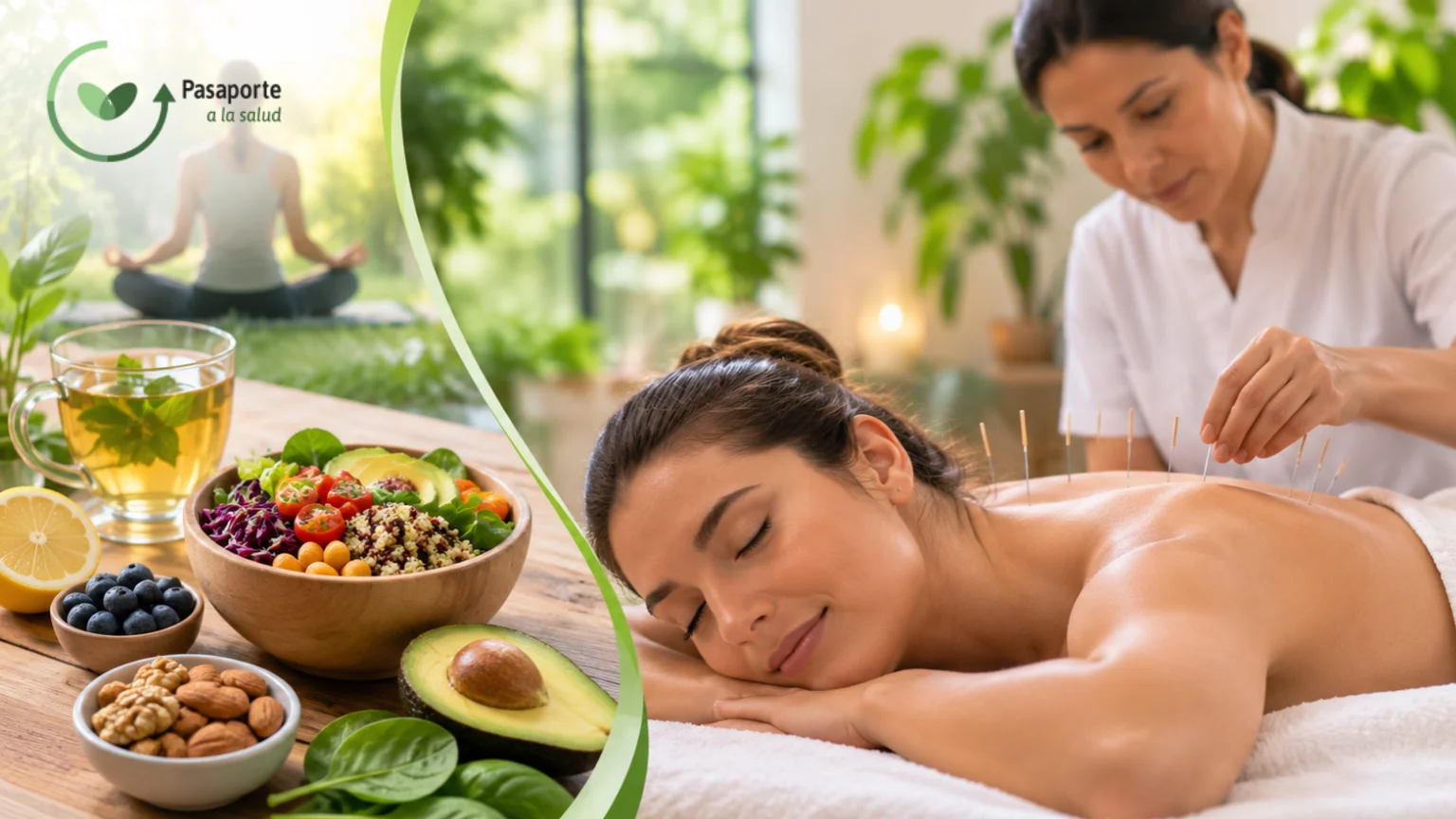
Yes, and many people use both. In traditional Oriental medicine, food is part of care. A practitioner asks about your digestion, sleep, energy, and daily habits, then suggests changes to match. Acupuncture is thought to stimulate and modulate the nervous system, and many people find the sessions calming. Points often used for calm in Chinese medicine include HT7, PC6, and Yintang (EX-HN3).
At Pasaporte a la Salud in Guaymas, Richard Smithee, a master of Oriental medicine with 31 years of practice, analyses the whole picture. That can include acupuncture, food advice through Nutrition & Lifestyle, and the wider approach of oriental medicine. If you want to read more about the needle side, see our guide to acupuncture for stress.
Research on acupuncture for stress is still growing, and results differ from person to person. It does not replace your doctor. It is meant to work alongside the care you already have.
Stress, Your Stomach, and Your Blood Sugar
Stress and food often show up in the stomach first. Some people get heartburn, cramps, or a burning feeling when they are tense. If that happens a lot, read about our natural treatment for gastritis and talk to your doctor.
Blood sugar is another link. Big swings from skipped meals and sugary snacks are hard on everyone, and harder if you live with diabetes. Our guide on how to manage type 2 diabetes naturally and the natural treatment for diabetes page explain more. Always tell your doctor about any change in food or medicine.
How Do You Start?
A diet for stress relief does not need special products or a long shopping list. Pick one step this week and add another next week.
1. Eat breakfast with some protein, like eggs or yogurt.
2. Add one bean, seed, or leafy green to a meal each day.
3. Cut back by one cup of coffee, or have your last cup before noon.
4. Keep a snack in your bag, such as nuts or fruit, so you do not skip meals.
5. Go to bed at about the same time each night.
When Should You See a Doctor?
Food helps, but it has limits. See your doctor if stress or anxiety lasts for weeks, keeps you from working or sleeping, or comes with panic attacks, chest pain, or thoughts of hurting yourself. If you feel more uneasy, call local emergency services right away. Do not change or stop any medicine because of something you read here. Talk to the doctor who prescribed it first.
You can also read about our approach on the treatment for anxiety and stress page.
Frequently Asked Questions
What should I eat when I am stressed?
Eat regular meals with protein, fiber, and healthy fats. Good choices are eggs, beans, fish, vegetables, nuts, seeds, and whole grains. These keep your energy steadier than sweets or skipped meals.
What foods make stress worse?
Too much caffeine, sugary snacks, alcohol, and long gaps between meals are the usual ones. They can leave you jittery, tired, or unable to sleep. You do not have to quit them. Cutting back is often enough.
Does magnesium help with stress?
Your body needs magnesium for normal nerve and muscle function. Food sources include pumpkin seeds, beans, spinach, and whole grains. Research on magnesium for stress is still limited, so aim for food first and ask your doctor before taking supplements.
Can acupuncture help with stress?
Many people find acupuncture relaxing, and it is thought to stimulate and modulate the nervous system. Research is growing, and results vary. It works best as a complement to good sleep, good food, and medical care.
How long does it take for a stress diet to work?
It varies. Some people notice steadier energy in a couple of weeks, but there is no set timeline. Keep a short daily note on sleep, energy, and mood so you can see the pattern.
Start Small With Nutrition for Stress
Nutrition for stress is about steady habits, not rules. Eat regular meals, add a few of the foods above, cut back on where coffee, sugar, or alcohol are getting in the way, and give it a few weeks. If you want help building a plan that fits your health and your schedule, Pasaporte a la Salud in Guaymas can help.Book an appointment or call the clinic at 52-622-224-3255 or 52-622-142-0042. You will find us at Blvd. Sánchez Taboada #706, Colonia San Gilberto, Guaymas, Sonora. Hours: Monday, Tuesday, and Friday, 9:00 to 12:00 and 3:00 to 6:00. Saturday, 9:00 to 1:00.


