

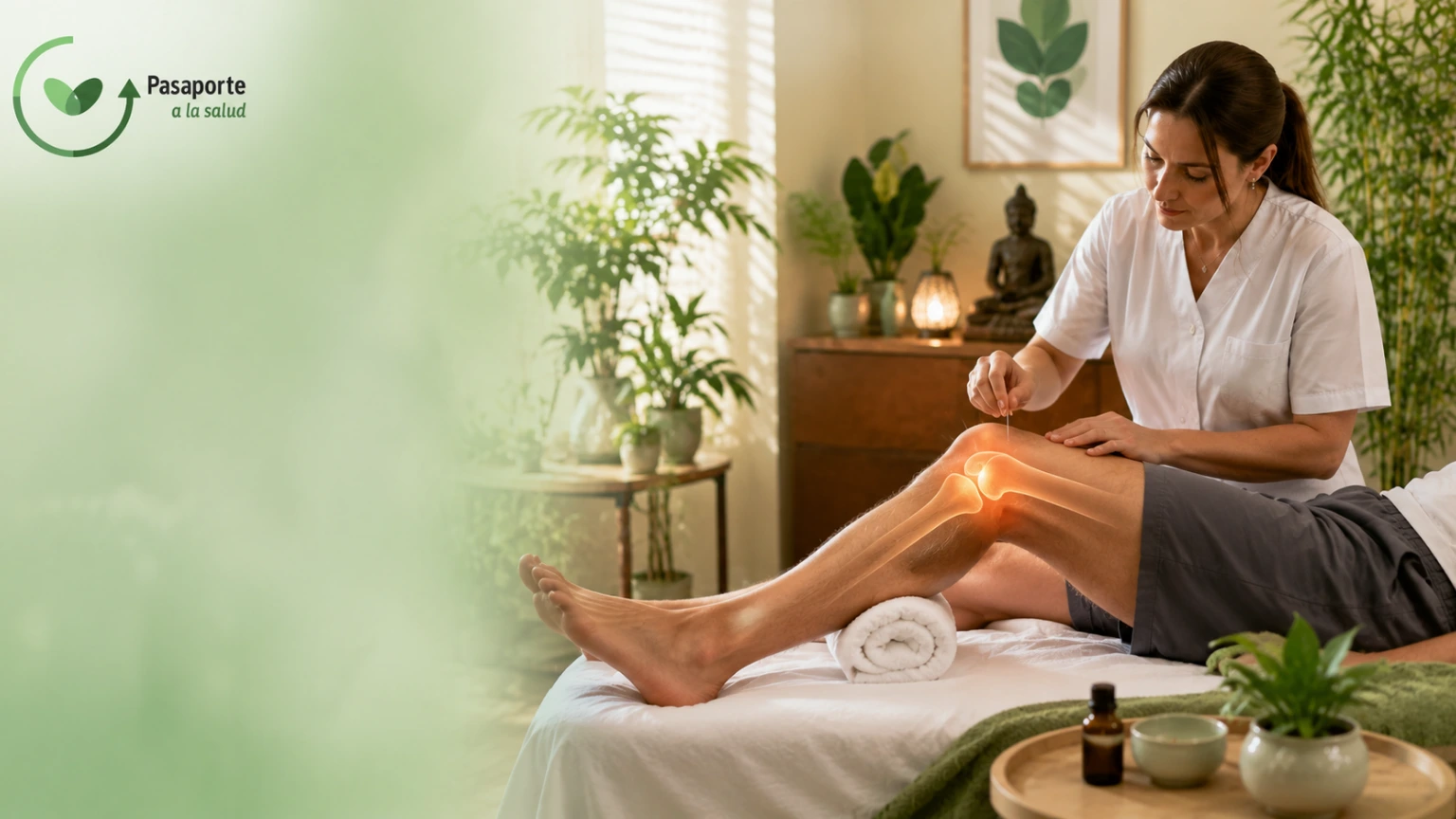
You know the routine. You wake up, and before you even sit up, your knee or your lower back reminds you it’s still there. You stretch a little, take something for the pain, and by mid-morning, you feel almost normal again. Then the afternoon comes, or the next day, and the same ache is back like it never left.
If this sounds familiar, you’re not imagining things, and you’re not doing anything wrong. When pain keeps coming back, it may be a sign that the underlying cause needs another look, or that your current treatment approach needs adjusting. That’s not a failure on your part. It’s just a sign that it may be time to look at the problem from a different angle.
This is where joint pain treatment built around a real assessment, rather than a repeat of the same painkiller-and-rest cycle, matters. It’s also where some people start asking whether clinical acupuncture has a place in the plan.
Here’s the short answer: joint pain treatment works best when it’s built around what’s actually causing your discomfort, not just around covering it up. Clinical acupuncture is one option that may be added to that plan, usually alongside other care rather than instead of it. It isn’t a stand-in for a doctor’s diagnosis, and it doesn’t work the same way for everyone. But for people dealing with ongoing joint and back pain, it’s worth understanding.
Why Does Your Joint Pain Keep Coming Back?
Joint pain can have more than one cause
There isn’t one single reason joints hurt. For some people, it’s osteoarthritis, where the cartilage that cushions the joint has worn down over the years. For others, it’s inflammation flaring up after activity, or muscle tension pulling on a joint that’s otherwise fine. Old injuries can leave joints more sensitive than they used to be, even after they’ve technically healed. Overuse, poor movement patterns, nerve irritation, and simple age-related wear all play a role too, and often more than one of these is happening at the same time.
This is exactly why the same pill or the same stretch doesn’t always work twice. Your pain has a specific shape to it, even if you can’t name it yourself.
Pain relief is not always the same as treating the problem
There’s a difference between making pain quieter for a few hours and actually addressing what’s behind it. Managing symptoms matters, especially on bad days. But so does understanding what’s contributing to the pain, improving how your joint actually moves, and building a plan around your specific situation rather than a general one.
One treatment does not work equally well for everyone, and that’s true across the board, not just for acupuncture. A method that helped a friend or a family member might do very little for you, simply because your pain isn’t identical to theirs.
What Should You Look for in Joint Pain Treatment?
A responsible treatment plan isn’t complicated, but it does need a few things in place before it’s likely to help.
| What you need | Why it matters |
| Proper assessment | Pain can have different causes |
| Personalized treatment | Your pain pattern is unique |
| Evidence-based care | Helps you make informed decisions |
| Progress tracking | Shows whether treatment is helping |
| Appropriate referrals | Some conditions need medical or specialist care |
Your treatment should start with an assessment
Before anyone treats your pain, they should understand it. That means knowing where it’s located, how long it’s been going on, what makes it worse, what eases it, and what you’ve already tried.
It also means understanding how the pain affects your daily life, whether it’s keeping you from walking comfortably, sleeping through the night, or doing your job without wincing.
When you may need conventional medical evaluation
Most joint and back pain isn’t an emergency, but a few signs do call for medical attention rather than a treatment plan at home. These include noticeable swelling, redness or warmth around a joint, fever, a recent significant injury, new weakness or numbness, symptoms you can’t explain, or pain that’s severe and getting worse rather than better. If any of these apply to you, a medical evaluation should come first.
How Can Clinical Acupuncture Help With Joint Pain?
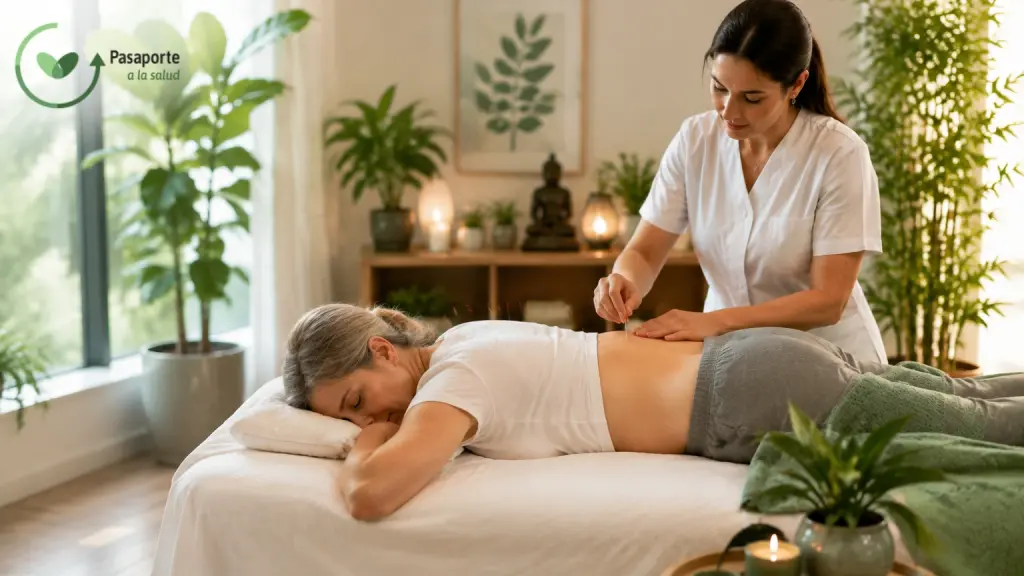
What happens during an acupuncture session?
A typical session starts with an assessment, where the practitioner asks about your symptoms and pain history. From there, specific points are selected based on your particular complaint. Fine, sterile, single-use needles are placed at those points and left in for a set period of time, usually somewhere around twenty to thirty minutes. Afterward, the practitioner checks in on how you’re responding, which helps shape future sessions.
What does the research say about acupuncture for pain?
This is where it’s worth being careful, because acupuncture gets oversold online fairly often. What the research actually shows is more measured than that.
The National Center for Complementary and Integrative Health (NCCIH), part of the U.S. National Institutes of Health, has reviewed a large body of studies on acupuncture for pain. For chronic low-back pain, the evidence has been rated as moderate quality, and a 2017 clinical guideline from the American College of Physicians lists acupuncture among the nondrug options recommended as first-line care.
A 2020 Cochrane review of 33 studies involving 8,270 people found that acupuncture provided greater back pain relief and improved back function compared with no treatment. However, the differences were smaller when acupuncture was compared with usual care or sham acupuncture, which is why the evidence should be viewed realistically rather than as proof that acupuncture works for everyone
For osteoarthritis, research suggests acupuncture may provide pain relief, although the size of the benefit varies and the evidence is not equally strong for every joint.
None of this means acupuncture cures joint pain or works the same way for every patient. The effects reported are generally modest, not dramatic, and results vary from person to person. What the research does support is that acupuncture may be a reasonable option as part of a broader plan, particularly for certain types of chronic pain.
Can acupuncture help you move with less pain?
For patients where acupuncture does help, the benefit usually shows up in daily life more than in any single number. Walking to the store without stopping halfway. Sitting through a full workday without shifting every few minutes. Sleeping through the night instead of waking up because a hip or shoulder found an uncomfortable position. These are the outcomes people actually care about, and they’re realistic goals — not guarantees, but reasonable ones to work toward.
Acupuncture for Back Pain: Is It Right for You?
When acupuncture may be considered for back pain
Acupuncture for back pain tends to come up most often for chronic low-back pain, recurring muscular tightness, general stiffness, and pain that’s started interfering with everyday tasks like bending, lifting, or sitting for long stretches. Whether it’s appropriate for your specific back pain depends on what’s causing it, which is something a practitioner needs to assess rather than something you should guess at on your own.
Acupuncture vs. chiropractic treatment for back pain
People often want to know how acupuncture stacks up against other common options. Here’s a straightforward comparison.
| Approach | Main focus | May be considered for |
| Clinical acupuncture | Needle-based stimulation and pain management | Certain pain conditions |
| Chiropractic treatment | Manual and spinal approaches | Selected musculoskeletal problems |
| Physical therapy | Movement, strength, and function | Rehabilitation and mobility |
| Medical care | Diagnosis and medical treatment | Conditions requiring medical evaluation |
No single one of these is universally better than the others. Chiropractic treatment works well for some people and some conditions; acupuncture works well for others. Back pain treatment that actually helps usually depends on your specific symptoms, your goals, and a professional’s assessment of what’s driving your pain, not on which option sounds the most appealing.
What If You Have Tried Painkillers, Exercise, or Other Treatments?
You don’t have to keep repeating the same treatment
If you’ve already gone through medication, rest, exercise routines, massage, or physical therapy and you’re still dealing with pain, that’s frustrating, and it doesn’t mean any of those approaches were wrong to try. It usually just means the plan needs to change, not that you need to keep pushing through the same one hoping for a different result.
Your next step should be a more personalized plan
A more useful next step usually looks like this:
- Review what you’ve already tried, and what did or didn’t help.
- Be honest about which symptoms are still there.
- Set goals that are realistic, not vague.
- Track whether the new approach is actually making a difference.
- Combine treatments when that makes sense for your situation.
How to Choose an Acupuncture Clinic in Mexico
Look for qualified and experienced practitioners
If you’re considering acupuncture, a few things are worth checking before you book. Look for proper professional qualifications and training, some experience treating pain conditions similar to yours, appropriate hygiene practices, sterile single-use needles, and a practitioner who communicates clearly about what to expect from treatment.
Ask these questions before your first appointment
- What could be contributing to my pain?
- How will you assess my condition?
- Is acupuncture appropriate for me?
- What should I expect during treatment?
- How will we know whether it’s helping?
- Should I continue my current medical treatment?
Choose a clinic that listens to you
A good clinic should listen to your symptoms, your history, what you’ve already tried, and what you’re hoping to get out of treatment. That kind of attention is what allows a treatment plan to be built around you specifically, instead of being applied the same way to every patient who walks in.
Pasaporte a la Salud, an oriental medicine and acupuncture clinic in Guaymas, Sonora, is built around that same idea. Patient education and understanding your health history before recommending a course of treatment, so any acupuncture plan reflects your situation rather than a standard routine.
Your Joint Pain Treatment Should Be About More Than Getting Through the Day.
Managing pain well enough to get through each day is one thing. Actually addressing it is understanding where it comes from, finding an approach that fits your body, and gradually moving more freely; it’s a different goal, and it’s the one worth aiming for. You don’t have to settle for pain that’s simply tolerable when there’s a chance to understand it better and treat it more precisely.
Take the First Step Toward a Personalized Treatment Plan
If persistent joint or back pain has been running your schedule instead of the other way around, it may be worth having a conversation about your options. Pasaporte a la Salud can talk through your symptoms and history with you and help you figure out whether clinical acupuncture makes sense as part of your care.
Frequently Asked Questions
What is the best joint pain treatment?
There isn’t one best treatment for everyone. The right approach depends on what’s causing your pain, how long you’ve had it, and your overall health. A proper assessment is the first step toward finding a plan that fits your situation specifically.
Can acupuncture help with joint pain?
For some people, yes. Research on knee osteoarthritis shows acupuncture may reduce pain more than no treatment, though the effect is usually modest. It works best as part of a broader plan, not as a standalone cure.
Is acupuncture effective for back pain?
Moderate-quality evidence supports acupuncture for chronic low-back pain, and it’s listed as a first-line nondrug option in some clinical guidelines. Results vary between patients, and it isn’t guaranteed to work for everyone.
What is the difference between acupuncture and chiropractic treatment?
Acupuncture uses fine needles at specific points to help manage pain, while chiropractic treatment typically involves manual and spinal techniques. Both may help with certain musculoskeletal issues, and the better fit depends on your specific condition.
How do I choose an acupuncture clinic?
Look for qualified, experienced practitioners who use sterile, single-use needles and take time to properly assess your condition. A good clinic will ask about your symptoms and history before recommending treatment, not after.
This article is for general education and does not replace individualized medical advice.


