

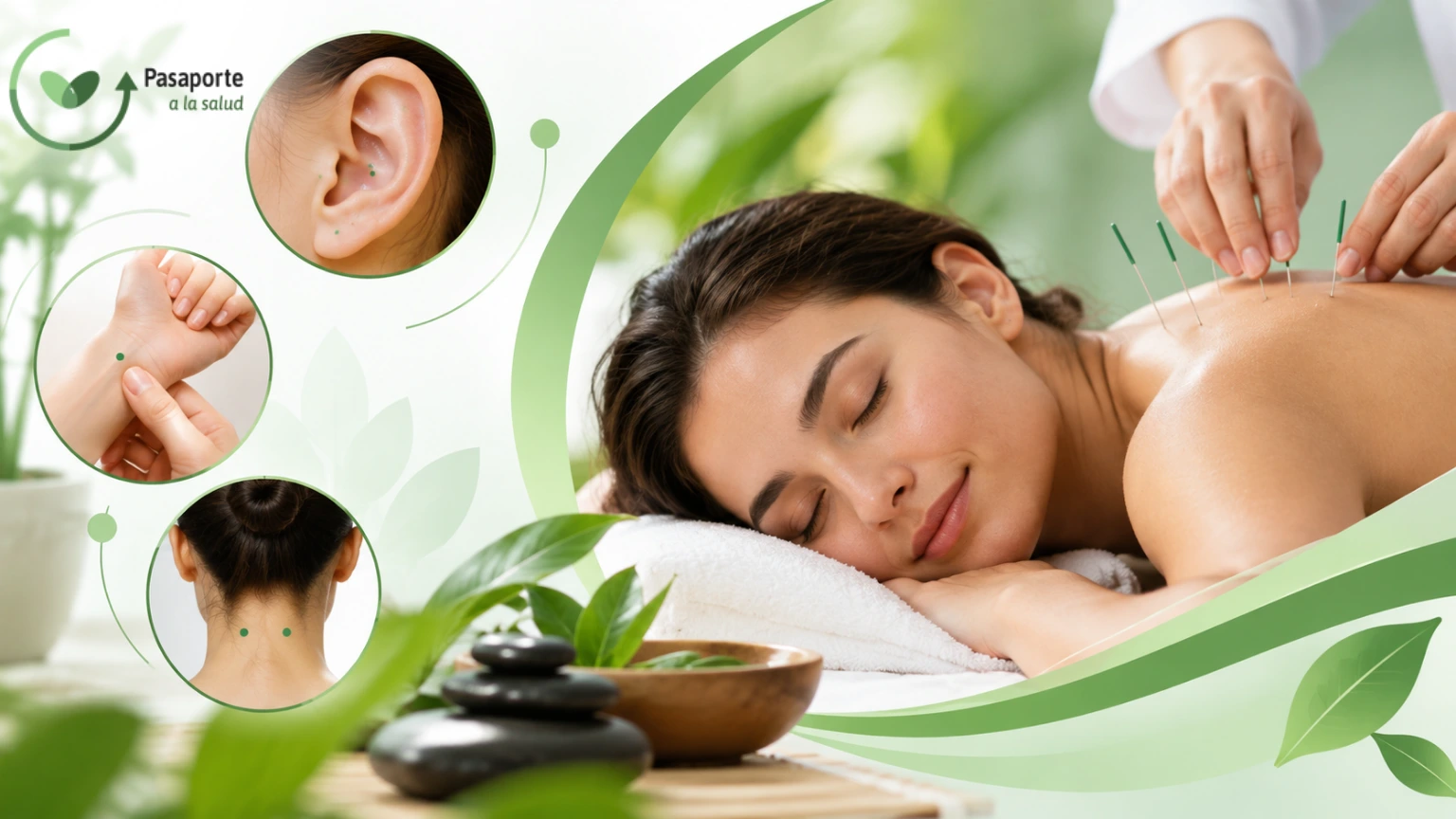
Six out of ten workers in Mexico. That’s how many dealt with moderate or severe job stress this past year, according to the AXA Mind Health Report 2026. Third place globally for workplace stress. Not exactly a title anyone wants.
It makes sense, then, that «natural treatment for stress and anxiety» shows up constantly in search bars across the country. People have hit a wall with what they’re already doing and want something that doesn’t come with a pharmacy receipt attached.
Acupuncture keeps surfacing as one of the more credible answers. We’ve used it at Pasaporte a la Salud in Guaymas, Sonora, for years, treating patients who come from all over Mexico and plenty who drive down from the US and Canada too. Below: how it works, what the research actually says, and what to expect walking in for the first time.
What Counts as a Natural Treatment for Stress and Anxiety?
Any approach that calms the body and mind without pharmaceuticals, basically. Acupuncture fits. It doesn’t override your body’s signals; it works with them, nudging things back toward balance instead of forcing a different chemical state on top.
Medication has its place. But side effects and dependency risk are real considerations, and that’s precisely why so many people go looking for something else first.
What Chronic Stress Does to You, Beyond the Obvious
A bit of stress is useful. It gets you through a deadline. Chronic stress is not that.
Cortisol and adrenaline stay elevated for weeks, sometimes months, and the body starts paying for it. Tight shoulders. Headaches that won’t quit. Sleep that never feels deep enough. Digestion gets weird. Your immune system loses ground, slowly, and the risk of anxiety or depression creeps up right alongside it.
Why the Search for Natural Treatment for Anxiety and Stress Keeps Climbing
Work pressure, money stress, family obligations stacking on top of each other. Younger workers feel it worst. Mental health-related absenteeism runs at 34% for ages 18 to 24, and it’s even higher, 37%, for the 25 to 34 group.
A lot of people, in other words, are done with quick fixes.
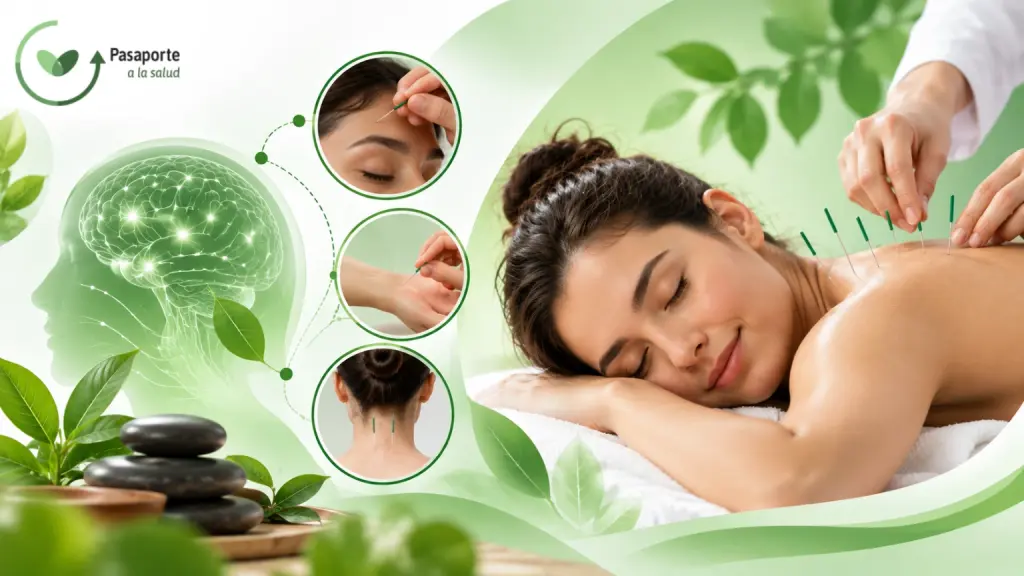
How Acupuncture Works as a Natural Treatment for Stress
Long before anything resembling modern medicine existed, people already had a name for this. Qi. A kind of energy running through the body along pathways called meridians.
Injuries block it. So do habits that never get broken, or stress that hangs around too long. Once that happens, health problems usually aren’t far behind. Getting needles into the right spots is how the energy starts moving properly again.
Restoring the Flow of Qi
If you’re skeptical, that’s a normal reaction. Back in 1985, though, a researcher in France injected radioactive isotopes into acupuncture points just to see where they’d travel. Turns out they moved along the same pathways described in texts written more than four millennia ago. That’s not something you can chalk up to tradition alone. Someone measured it, and the results held up.
Calming the Nervous System
Something shifts in the body during a session, moving away from fight-or-flight and into what’s often called rest-and-digest mode. Most patients notice this before anything else. A kind of letting go they can’t fully explain but feel almost immediately.
Lowering Cortisol Levels
Stress hormones, cortisol especially, tend to take over once things get bad enough. One study in The American Journal of Psychiatry looked at patients getting acupuncture for stress and found their cortisol came in lower than people who skipped treatment altogether.
Bring that number down, and you’re taking pressure off the heart, the digestive system, the immune system, all of it, bit by bit.
Releasing Endorphins Naturally
Each needle triggers a small endorphin release. Your body’s own feel-good chemistry, essentially. It’s a big part of why patients tend to leave sessions lighter than they arrived.
What the Research Actually Shows
This isn’t just anecdotal enthusiasm.
A 2020 pilot trial covering 20 randomized controlled trials confirmed acupuncture reduced stress compared to sham treatment.
A 2021 meta-analysis found it outperformed control conditions for anxiety relief, both physical and mental symptoms.
Separately, a study in The Journal of Alternative and Complementary Medicine found bigger anxiety reductions among patients receiving real acupuncture versus placebo.
The World Health Organization already lists it as appropriate for stress, anxiety, depression, and insomnia, for what that’s worth.
None of this replaces your doctor. It does explain why so many people are willing to add it to whatever they’re already doing.
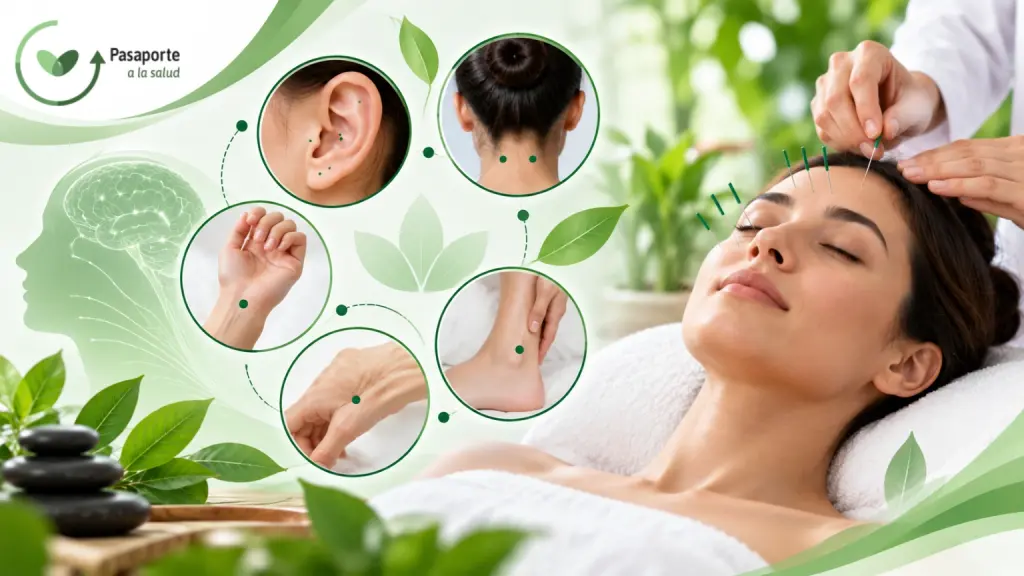
Key Acupuncture Points Used for Stress Relief
Different points, different jobs. A practitioner picks based on where tension is sitting.
Yintang: The Third Eye Point
Sitting right between the eyebrows, Yintang is known mostly for a grounding, near-immediate calming effect. Many patients feel it working within minutes of the needle going in.
Shen Men: The Heavenly Gate
Located in the ear, Shen Men is tied closely to emotional balance. It’s often the go-to point when a patient’s mind won’t quiet down at night, especially.
Electrostimulation for Stubborn Cases
Sometimes stress just doesn’t let up, no matter what else we try. In those cases, we’ll often bring in electrostimulation, sending a light current between two paired needles, which tends to push the relief deeper and make it last.
What Happens During Your First Acupuncture Session
First-timers get a little nervous walking in. Understandable.
The Initial Health Assessment
Set aside about two hours. We go through health history, current medications, supplements, what you’re actually hoping changes. No two patients leave with the same plan, since no two people carry stress in quite the same way.
What the Needles Feel Like
The needles themselves are quite thin and made from stainless steel. Each one gets used exactly once and then discarded, so there’s no reuse involved.
Rather than pain, most people notice something closer to a dull ache or a faint tingle as they go in, and they’ll remain in place for about 15 minutes so your body has time to respond.
How Many Sessions You’ll Likely Need
Sessions needed? Depends how long you’ve been carrying this around.
Acute stress that just started usually needs one or two visits. Something more ongoing, moderate but persistent, often takes three or four sessions to shift.
Years-long stress or anxiety won’t budge in a single appointment though, and patients dealing with that tend to need four to ten sessions before they notice a real change.
We usually start with weekly visits and pull back to every couple weeks once symptoms start loosening their grip.
Pairing Acupuncture With Other Natural Habits
Rarely works in total isolation, and it doesn’t need to. Patients who see the strongest results usually stack a few things on top: a daily walk, even a short one. Sleep on something resembling a schedule. Whole foods over processed sugar. A few minutes of slow breathing when things spike. Less caffeine and alcohol late in the day, particularly.
Combining Treatments at Our Clinic
We also offer chiropractic care and guidance rooted in Oriental medicine, for anyone wanting a fuller approach instead of one isolated fix.
Is Acupuncture Actually Safe?
Yes. Centuries of use back that up, and roughly a third of the world’s population turns to it as a preferred treatment. Needles are FDA-approved, individually packaged, never reused twice. Side effects are rare. It tends to complement prescribed medication rather than clash with it.
A Note on Existing Medication
It’s worth being direct about this part: don’t make changes to your medication on your own. Talk to your doctor first. Acupuncture is designed to complement the care you’re already receiving, not take its place.
Frequently Asked Questions (FAQ)
Can I try acupuncture if I’m already taking medication?
In most cases, yes. Many patients use acupuncture to support a treatment plan they’re already following. It’s still a good idea to mention it to your prescribing doctor before you begin.
How soon can I expect to notice a difference?
Some patients feel calmer after just one session. For chronic stress or anxiety, it usually takes between four and ten sessions before the improvement feels stable.
Is acupuncture painful?
Generally, no. Most patients describe a dull ache or a light tingling sensation as the needles are inserted, rather than actual pain. Many find the experience relaxing.
What should I bring to my first appointment?
Please bring a list of your current medications and supplements, along with any relevant medical history. Plan for about two hours, since this allows enough time to build an accurate treatment plan.
Where can I find natural treatment for stress and anxiety near Guaymas?
Pasaporte a la Salud, located on Blvd. Sanchez Taboada in Guaymas, offers acupuncture, chiropractic care, and Oriental medicine under one roof. We treat patients from across Mexico as well as visitors from the US and Canada.
Why Patients Choose Pasaporte a la Salud
Based in Guaymas, Sonora, though our patients come from well beyond it, plenty cross the border from the US and Canada specifically for treatment. Alongside acupuncture, we bring in nutrition guidance and chiropractic care as well.
That way, anxiety and stress aren’t treated as isolated symptoms to knock out one by one. We’re looking at what’s really behind them for you, and building the plan from there.
Whenever you feel ready, reach out and set up a consultation. We’ll talk through your history, what you’re hoping changes, and let your body’s response guide the plan from that point forward.


